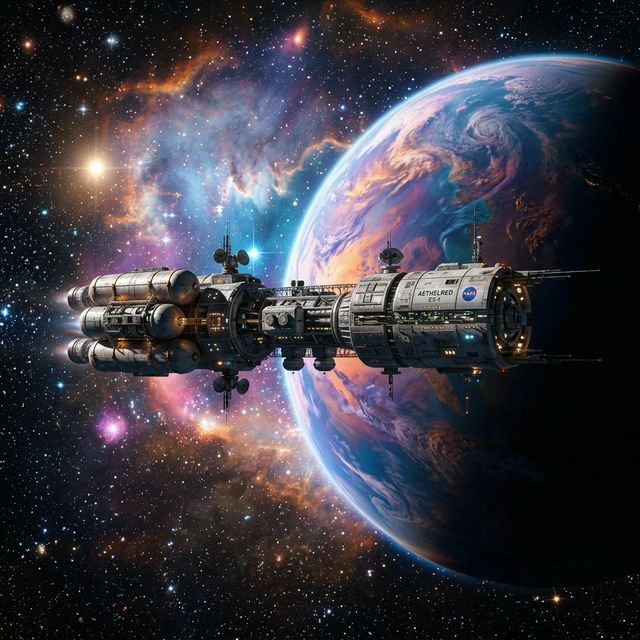
Why Everyone is Talking About space exploration nasa news shorts
On August 29, 2022, NASA's Artemis I mission achieved a historic milestone, marking the first step in humanity's return to the Moon after a 50-year hiatus. The event ignited a wave of discussions across social media and news platforms, with millions tuning in to watch the launch live. This spectacle is just one of the many reasons why space exploration, particularly NASA's updates, has become a hot topic, captivating both seasoned enthusiasts and casual followers alike.
The Allure of New Discoveries
At the heart of the excitement lies the promise of discovery. The James Webb Space Telescope (JWST), launched on December 25, 2021, has already delivered breathtaking images and groundbreaking data that challenge our understanding of the universe. For instance, its first deep-field image, released on July 12, 2022, showcased thousands of galaxies in a single frame, with some dating back over 13 billion years. The JWST has not only expanded our cosmic horizons but has also reignited public interest in astronomy and space science.
The Push for Mars Exploration
NASA's ongoing commitment to Mars exploration has further fueled the conversation. The Perseverance rover, which landed on Mars on February 18, 2021, is currently collecting samples that may hold clues to ancient microbial life. With over 30 samples collected so far and a planned return mission slated for the late 2020s, the stakes are incredibly high. The possibility of discovering life beyond Earth has captivated imaginations, making Mars a focal point of discussion and speculation among scientists and the public alike.
A New Era of Collaboration
The new era of space exploration is characterized by unprecedented collaboration, not just within NASA but also among international agencies and private companies. The Artemis program, aiming to return humans to the Moon by 2024, plans to involve various international partners such as the European Space Agency and the Japan Aerospace Exploration Agency. This collaborative spirit has democratized space exploration, allowing people from diverse backgrounds to engage with the science and technology that propels us into the cosmos.
The Impact of Social Media
Social media platforms have played a pivotal role in amplifying these discussions. Platforms like Twitter and Instagram allow for real-time updates, enabling enthusiasts to follow missions as they unfold. NASA’s social media team, with over 60 million followers across various platforms, has masterfully harnessed this engagement, transforming complex scientific concepts into accessible content. The result is a vibrant online community that shares insights, theories, and excitement, further propelling public interest.
Conclusion: A Shared Journey
As we witness these monumental strides in space exploration, it becomes clear that the conversation is about more than just missions and technology. It’s a collective human journey, pushing the boundaries of what we know and where we can go. With upcoming missions, groundbreaking discoveries, and a more interconnected world, NASA and space exploration are not just topics of the moment; they are the embodiment of humanity's quest for knowledge and understanding.